

How to Build Your Budget
Budgeting takes practice, so it may take a few tries to find what works for you.
Step 1: Pick a Budgeting Tool
To create a budget, you can use a spreadsheet template, a budgeting app, or simply a pen and paper.
Bangor Saving's Bank's Money Management tool can also help, which is found when you log into your accounts.
Step 2: Review Your Income & Find Your "Take-Home Pay"
Before making a budget, look at all your sources of income, including your paystubs, to see how much money you take home after taxes and other deductions.
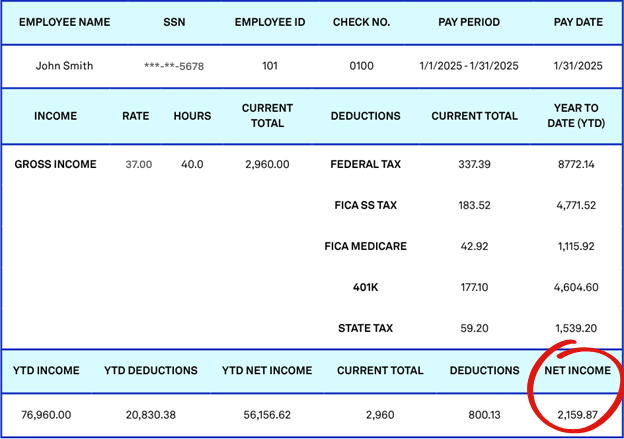
Net Income, also known as your “take-home” pay is the income you receive after taxes and other deductions, this is the money available each pay period to use to budget your expenses.
Sample Paystub:
Best Practice
It’s best to underestimate income and overestimate expenses when planning.
If your income changes from month to month, based on your own situation, there are a couple of options for how to budget over a 12-month period:
- Option 1: Use your lowest earning month's income for your budget to ensure you have enough to cover your expenses in any other month.
- Option 2: If you plan on setting aside money from a higher earning month to cover expenses in lower earning months, estimate your average income over 12 months.
Step 3: Determine Your Monthly Spending
In order to create an accurate budget, gather accurate spending history. Therefore, after you've reviewed your monthly income. Look at your bank account and credit card statements from the last 1-3 months. Write down all your expenses and see how much you typically spend in each category. Categories could include:
- Mortgage/rent
- Insurance
- Electricity
- Medical/Dental
- Loan Payments
- Vehicle Maintenance
- Groceries
- Water/Sewer
- Phone
- Internet
- Fuel/Oil
- Gas
- Eating Out
- Entertainment
- Subscriptions
- Pet Expenses
- Fun Money
- And remember to include your savings contributions in your budget
Best Practice
Modify your budgeting toll templates with the expense categories to fit your lifestyle.
Step 4: Create Your Budget
Subtract your expenses from your income and see how much money is left over. For example:


After using your budget for a few months, ask yourself:
- Do I have extra money left over? Consider where that money would best serve you. Any leftover funds could go to an emergency fund, another savings goal, paying on outstanding loan balances, or putting it towards your retirement savings.
- Am I spending more than I earn each month? If so, focus on reducing expenses or increasing income where possible.
It can be hard to stick to your budget at first - keep trying. Each month you'll understand your money better and find the best practices that fit your life.
Step 5: Check Your Progress
At the end of each month, review what worked and didn’t work about your budget and see how you can adjust.
You may need to tweak the amount you set aside into each category until you find what works best for you.
Continue Your Financial Wellness Journey
Next Module: Create Your Financial Goals
Overview: Your Financial Wellness Journey